Understanding Iron Chlorosis & Practical Solutions for Modern Agriculture
Iron is an essential micronutrient for plant growth, playing a critical role in chlorophyll formation, photosynthesis, and overall crop vigor. However, in many agricultural regions around the world — especially arid and alkaline environments — crops often suffer from iron deficiency even when iron is present in the soil.
This condition is commonly known as iron chlorosis.
What Happens in High pH Soils?
In alkaline soils with a pH above 7.5, iron becomes chemically tied up and unavailable for plant uptake.
Although the soil may contain iron naturally, plants are unable to absorb it efficiently under high pH conditions. As a result, crops begin to show deficiency symptoms that directly impact growth and yield.
Typical regions affected include:
- Middle East
- North Africa
- Arizona & Southwestern United States
- Parts of Latin America
- Greenhouse systems with bicarbonate-rich irrigation water
Common Symptoms of Iron Chlorosis
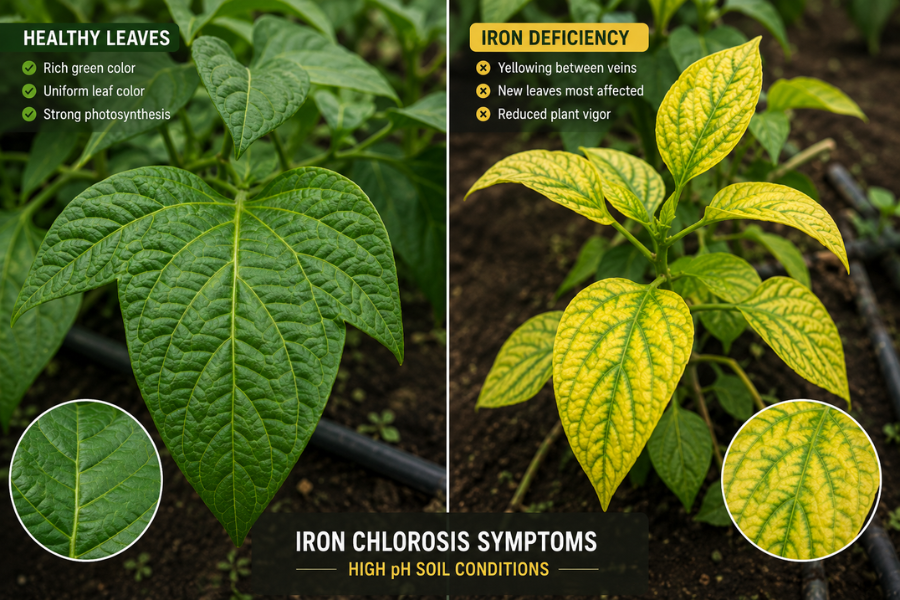
Iron deficiency usually appears first on young leaves.
Typical symptoms include:
- Yellowing between leaf veins
- Pale or lime-green new growth
- Reduced photosynthesis
- Weak plant vigor
- Poor flowering and fruit development
In severe cases, crop productivity and fruit quality may decline significantly.
The problem is especially common in:
- Tomato
- Pepper
- Strawberry
- Citrus
- Grapes
- Greenhouse vegetables
Why Standard Iron Fertilizers Often Fail
Many conventional iron fertilizers work well under acidic conditions but lose effectiveness rapidly in alkaline soils.
Under high pH conditions:
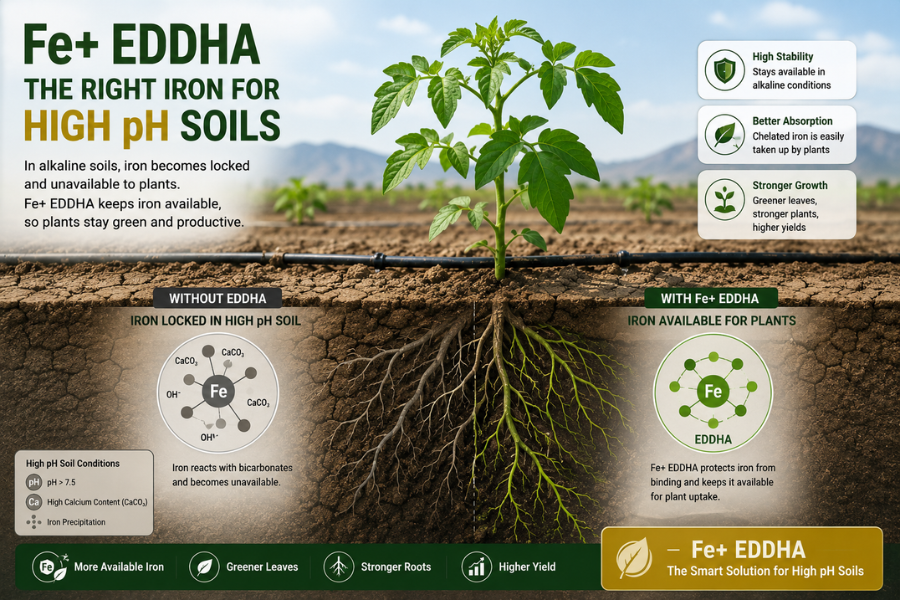
- Iron reacts with calcium carbonate and bicarbonates
- Iron precipitates become insoluble
- Nutrient availability drops dramatically
This is why growers may repeatedly apply iron products without achieving long-term correction.
Why Fe+ EDDHA Performs Better in Alkaline Soils
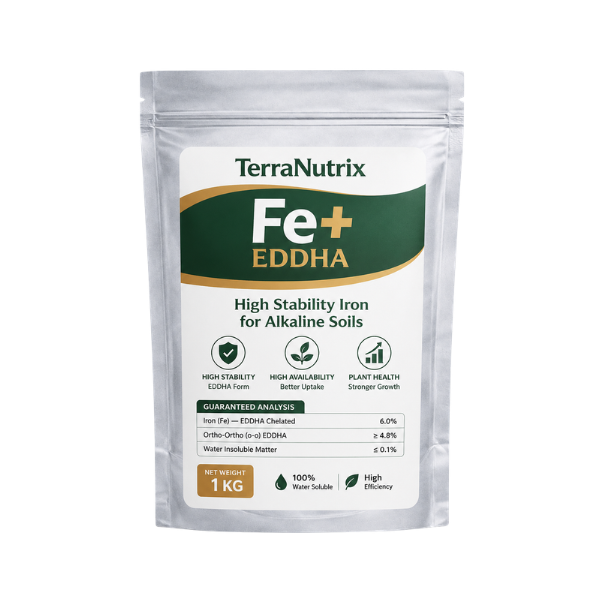
EDDHA-chelated iron is specifically designed for high pH environments.
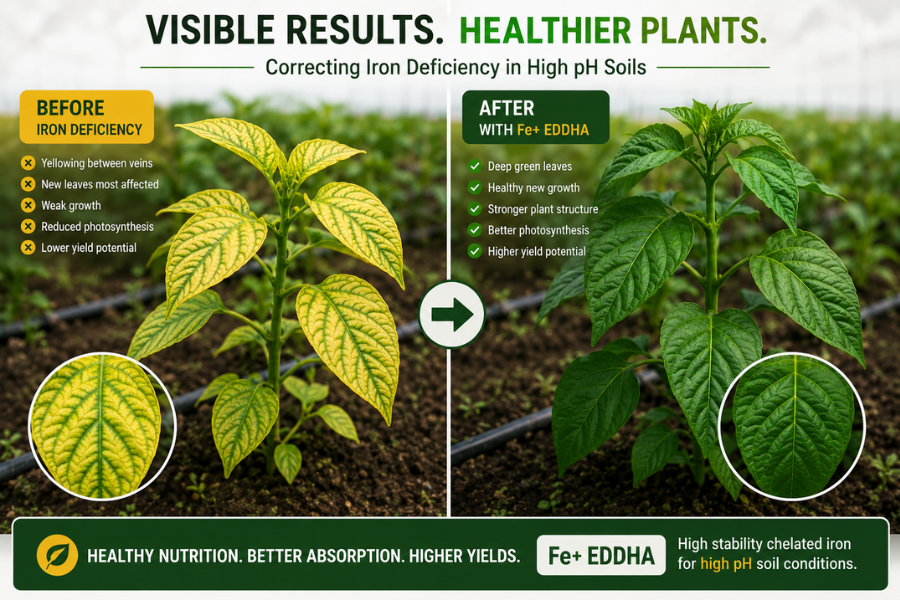
Unlike conventional iron sources, Fe+ EDDHA remains stable and available to plants even under alkaline soil conditions.
Key advantages of Fe+ EDDHA include:
- High stability in soils above pH 7.5
- Improved iron availability
- Faster correction of chlorosis
- Stronger vegetative growth
- Better crop performance and yield potential
Fe+ EDDHA is especially suitable for:
- Drip irrigation systems
- Fertigation programs
- High-value vegetable production
- Orchards and greenhouse crops
Recommended Application Approaches
For best performance, iron management should be integrated into a complete crop nutrition strategy.
Common application methods:
Soil Application
Helps maintain available iron near the root zone.
Fertigation
Ideal for greenhouse and drip irrigation systems.
Preventive Programs
Early-season application helps reduce chlorosis risk before severe symptoms appear.
Iron Availability Is the Real Challenge
Managing high pH soils is not simply about adding more nutrients.
The real challenge is ensuring nutrients remain available for plant uptake.
In alkaline environments, selecting the right iron source can make a major difference in:
- Leaf color
- Plant vigor
- Root activity
- Yield consistency
- Fruit quality
Final Thoughts
As modern agriculture continues to expand into arid and alkaline regions, efficient micronutrient management becomes increasingly important.
Understanding how soil pH affects nutrient availability allows growers and distributors to make more effective crop nutrition decisions.
At TerraNutrix, we focus on practical crop nutrition solutions designed for real agricultural conditions — including high pH and stress-prone environments.