
Introduction
Developing a successful fertilizer product is not simply about selecting nutrient elements and mixing raw materials together.
For fertilizer manufacturers, the choice of ingredients directly affects:
- Product stability
- Nutrient availability
- Crop performance
- Application method
- Production cost
- Market positioning
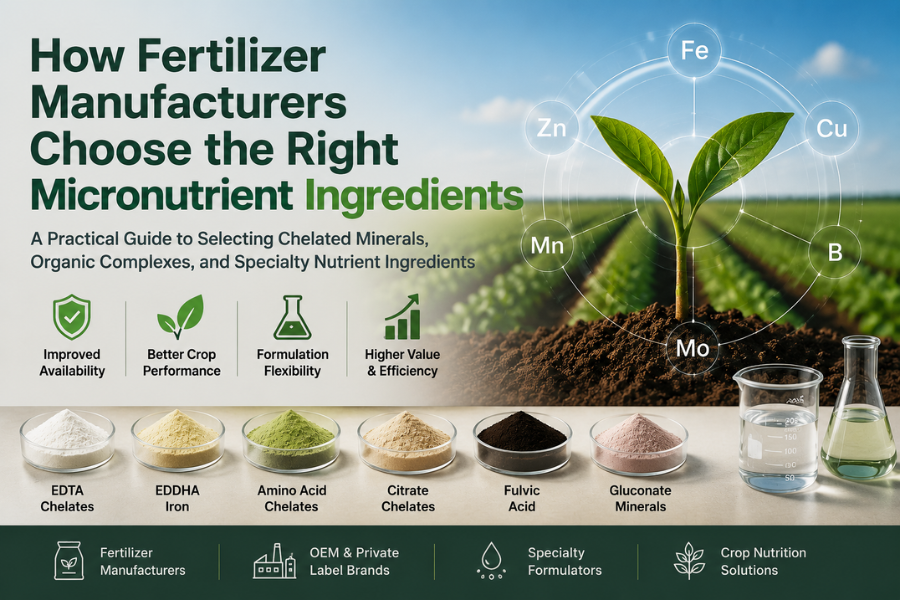
With the increasing demand for specialty fertilizers, manufacturers now have access to a wide range of micronutrient ingredients, including synthetic chelates, amino acid complexes, organic acid-based nutrients, and biostimulant ingredients.
Selecting the right ingredient technology is essential for creating effective and competitive fertilizer formulations.
1. Understand the Role of Each Ingredient
Before selecting a micronutrient ingredient, manufacturers should first define the purpose of the final product.
Different products require different ingredient strategies.
For example:
A greenhouse fertilizer may prioritize:
- Water solubility
- Compatibility
- Low residue
A soil-applied fertilizer may prioritize:
- Stability
- Long-lasting availability
- Resistance to fixation
A foliar fertilizer may prioritize:
- Leaf absorption
- Low phytotoxicity
- Rapid response
Therefore, there is no single “best” micronutrient ingredient.
The right choice depends on the final application.
2. Synthetic Chelates: Stability and Performance
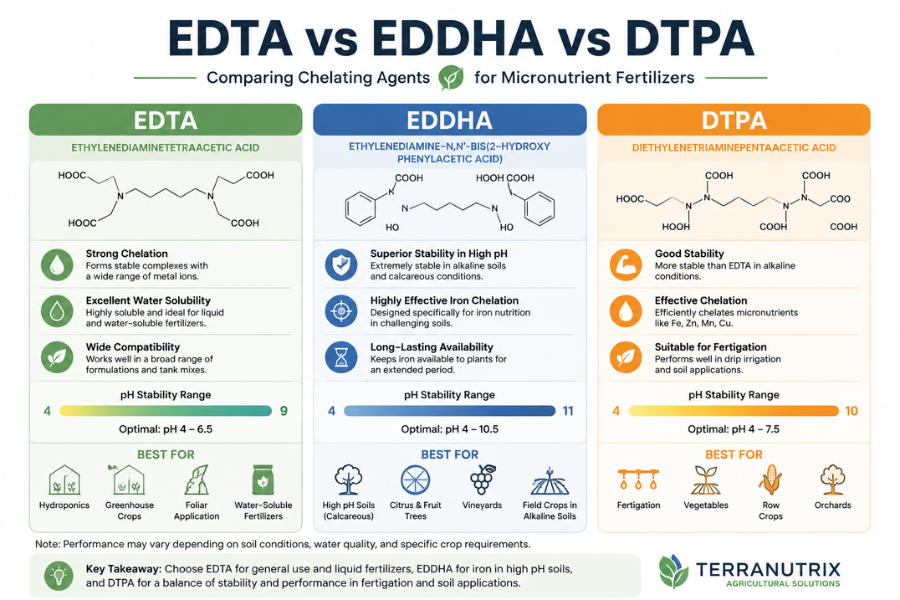
Synthetic chelating agents remain one of the most widely used technologies in professional fertilizer production.
Common examples include:
These ingredients are valued for their strong metal-binding ability and predictable performance.
EDTA Chelated Micronutrients
EDTA is one of the most commonly used chelating agents worldwide.
Typical products include:
Advantages:
✔ Excellent water solubility
✔ High formulation compatibility
✔ Suitable for liquid fertilizers
✔ Widely accepted in global markets
Common applications:
- Hydroponics
- Greenhouse fertilizers
- Foliar fertilizers
- Water-soluble fertilizers
EDDHA Iron
EDDHA is specifically valued for iron nutrition in challenging soil conditions.
Advantages:
✔ Superior stability in alkaline soils
✔ Excellent performance in calcareous soils
✔ Long-lasting iron availability
Common applications:
- Citrus
- Vineyards
- Fruit trees
- High-pH agricultural soils
DTPA Micronutrients
DTPA provides a balance between stability and formulation flexibility.
Advantages:
✔ Better alkaline stability than EDTA
✔ Excellent for fertigation systems
✔ Suitable for professional crop production
3. Amino Acid Chelated Minerals: Premium Nutrition Solutions
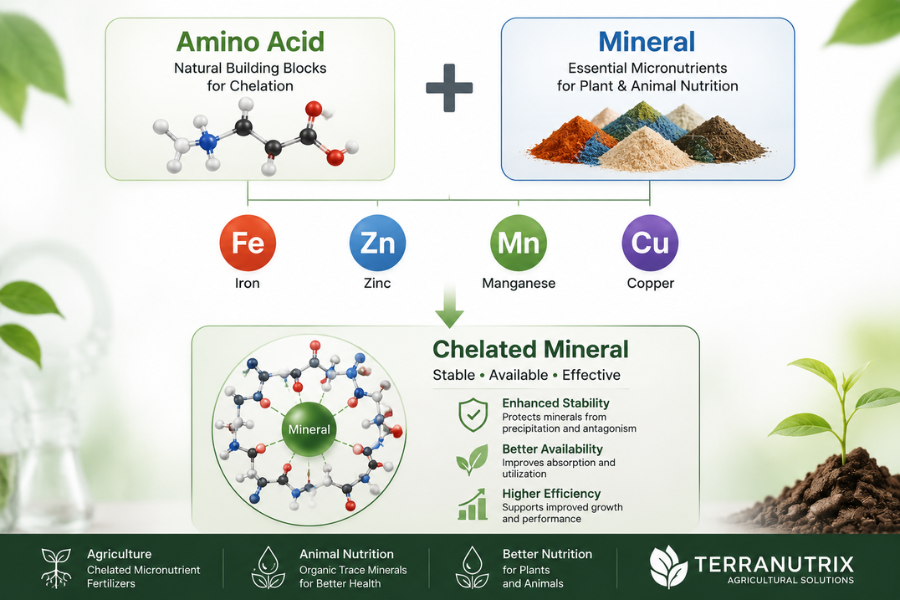
Amino acid chelated minerals combine micronutrients with amino acids to create highly compatible nutritional ingredients.
Common products:
- Amino Acid Chelated Iron
- Amino Acid Chelated Zinc
- Amino Acid Chelated Calcium
- Amino Acid Chelated Magnesium
Advantages:
✔ Excellent foliar performance
✔ Improved nutrient absorption
✔ Premium product positioning
✔ Suitable for specialty crops
These ingredients are commonly used in:
- Biostimulant fertilizers
- Foliar nutrition products
- High-value crop programs
4. Organic Acid-Based Ingredients: Natural Formulation Options
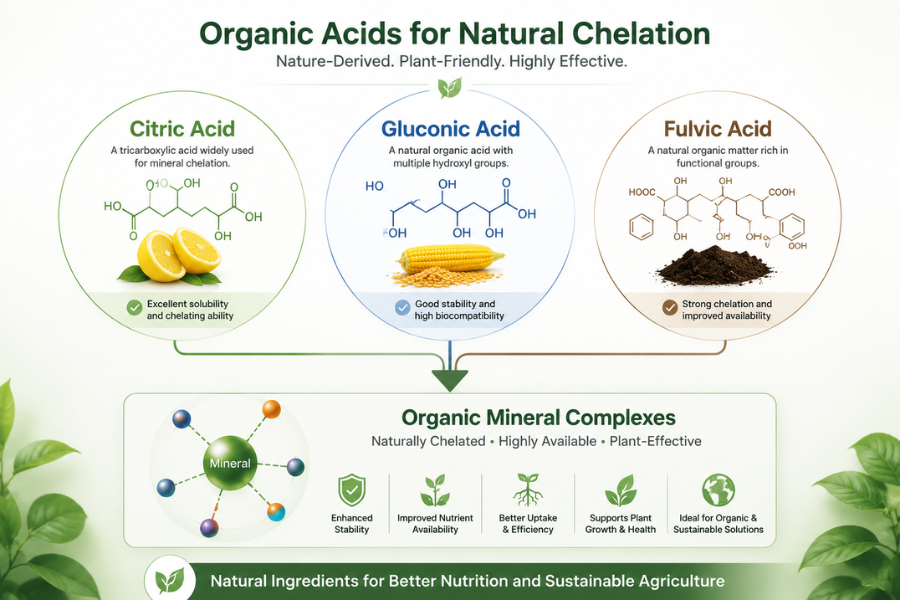
Organic acid-based ingredients are becoming increasingly popular as fertilizer manufacturers develop more sustainable products.
Common examples:
- Citric Acid-based chelates
- Gluconate minerals
- Fulvic acid complexes
Citrate Chelated Minerals
Citric acid-based mineral complexes provide:
✔ Good solubility
✔ Natural positioning
✔ Flexible formulation options
Applications:
- Liquid fertilizers
- Foliar products
- Specialty nutrition
Gluconate Minerals
Gluconate-based minerals offer:
✔ Excellent solubility
✔ Mild formulation characteristics
Common products:
- Ferrous Gluconate
- Zinc Gluconate
- Calcium Gluconate
Fulvic Acid Ingredients
Fulvic acid is widely used in premium agricultural formulations due to its natural complexing ability.
Applications:
- Fulvic chelated minerals
- Biostimulant products
- Soil and plant nutrition programs
5. Consider the Application Method
The same micronutrient can require different ingredient technologies depending on how it is applied.
| Application | Preferred Ingredients |
|---|---|
| Soil Application | EDDHA, DTPA |
| Fertigation | EDTA, DTPA |
| Hydroponics | EDTA |
| Foliar Spray | Amino Acid Chelates, Citrate Chelates |
| Organic-Based Products | Fulvic Acid, Organic Complexes |
| Premium Specialty Fertilizers | Amino Acid + Organic Ingredients |
6. Balance Performance and Cost
A successful fertilizer formulation requires balancing:
- Technical performance
- Raw material cost
- Target market
- Customer expectations
For example:
A commercial agriculture fertilizer may prioritize cost efficiency with EDTA or citrate technologies.
A premium specialty product may justify higher-value ingredients such as:
- Amino acid chelates
- Fulvic complexes
- Advanced micronutrient blends
The best formulation is not always the most expensive one, but the one that delivers the right value for the target customer.
7. Why Ingredient Selection Matters for OEM Manufacturing
For OEM and private label fertilizer production, ingredient selection directly influences:
- Product differentiation
- Marketing claims
- Customer acceptance
- Market positioning
By combining different ingredient technologies, manufacturers can create unique products for different markets.
Examples:
High-Premium Foliar Fertilizer
Amino Acid Chelates + Fulvic Acid
Alkaline Soil Iron Solution
EDDHA Iron + Supporting Biostimulants
Greenhouse Micronutrient Formula
EDTA Chelates + Organic Components
Conclusion
Choosing the right fertilizer ingredients is the foundation of developing successful crop nutrition products.
Synthetic chelates, amino acid complexes, organic acid-based ingredients, and biostimulants each provide unique advantages for different applications.
At TerraNutrix, we support fertilizer manufacturers and OEM partners with a broad portfolio of micronutrient ingredients, chelating agents, and customized formulation solutions designed for global markets.
Whether you are developing a new fertilizer product or improving an existing formulation, selecting the right ingredients is the first step toward creating a more effective and competitive solution.