
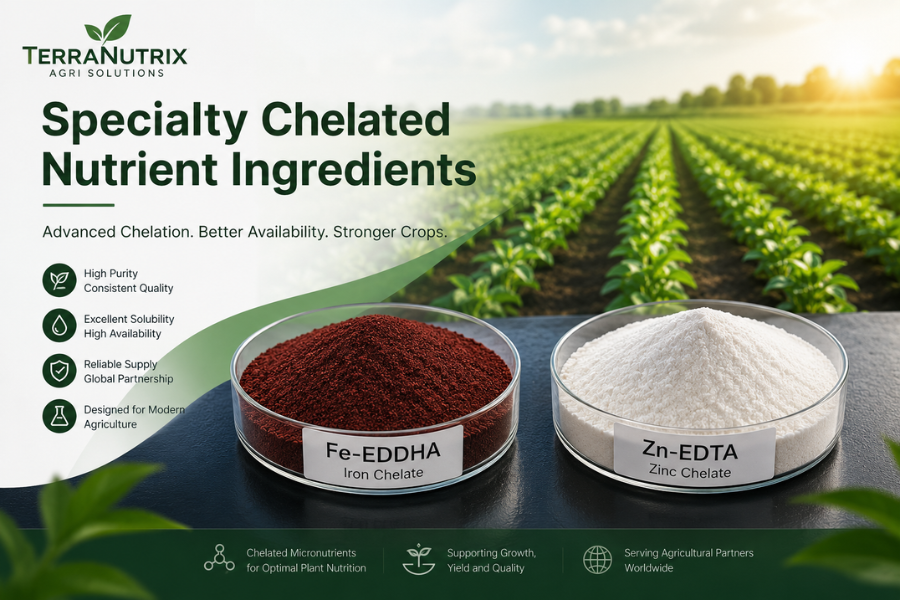
Why Micronutrients Matter
Micronutrients play an essential role in crop growth, nutrient metabolism, chlorophyll production, and overall plant performance.
Although crops require micronutrients in smaller quantities than nitrogen, phosphorus, or potassium, deficiencies can significantly impact yield, quality, and nutrient efficiency.
Modern agricultural systems increasingly rely on efficient micronutrient management to support sustainable crop production.
What Are Chelated Micronutrients?
Chelated micronutrients are nutrient elements that are chemically bound to a chelating agent.
The chelation process helps protect micronutrients from unwanted reactions in the soil or nutrient solution, allowing them to remain more available for plant uptake.
Common chelated micronutrients include:
- Iron Chelates
- Zinc Chelates
- Manganese Chelates
- Copper Chelates
Various chelation technologies are used depending on crop requirements and growing conditions.
Benefits of Chelated Micronutrients
Improved Nutrient Availability
Chelation helps maintain nutrient stability and availability, particularly in challenging soil environments.
Better Nutrient Efficiency
Chelated forms can improve the effectiveness of micronutrient applications by supporting nutrient uptake and utilization.
Enhanced Crop Performance
Balanced micronutrient nutrition supports chlorophyll production, plant metabolism, and overall crop development.
Flexible Application Options
Chelated micronutrients can be used in foliar applications, fertigation programs, greenhouse production systems, and specialty crop nutrition programs.
Common Chelation Technologies
EDDHA Chelates
EDDHA chelation is widely used for iron management in high-pH and calcareous soils where iron availability becomes limited.
EDTA Chelates
EDTA chelates are commonly used for iron, zinc, manganese, and copper nutrition in a wide range of agricultural systems.
Amino Acid Chelates
Amino acid chelated nutrients combine micronutrient nutrition with amino-acid-based carriers that support nutrient delivery.
Citrate Chelates
Citrate chelation provides an alternative organic chelation approach for specialty crop nutrition programs.
Chelated Micronutrients in Modern Agriculture
Chelated nutrient technologies are commonly used across:
- Field crops
- Specialty crops
- Greenhouse production
- Turf and landscape systems
- Home and garden products
As agricultural production systems become more intensive, nutrient efficiency continues to be an important factor in crop performance and sustainability.
Final Thoughts
Chelated micronutrients represent an important tool for improving nutrient availability and nutrient efficiency in modern agriculture.
Understanding different chelation technologies can help growers, formulators, and agricultural brands develop more effective crop nutrition programs while supporting long-term productivity.