What Is High-pH Soil?
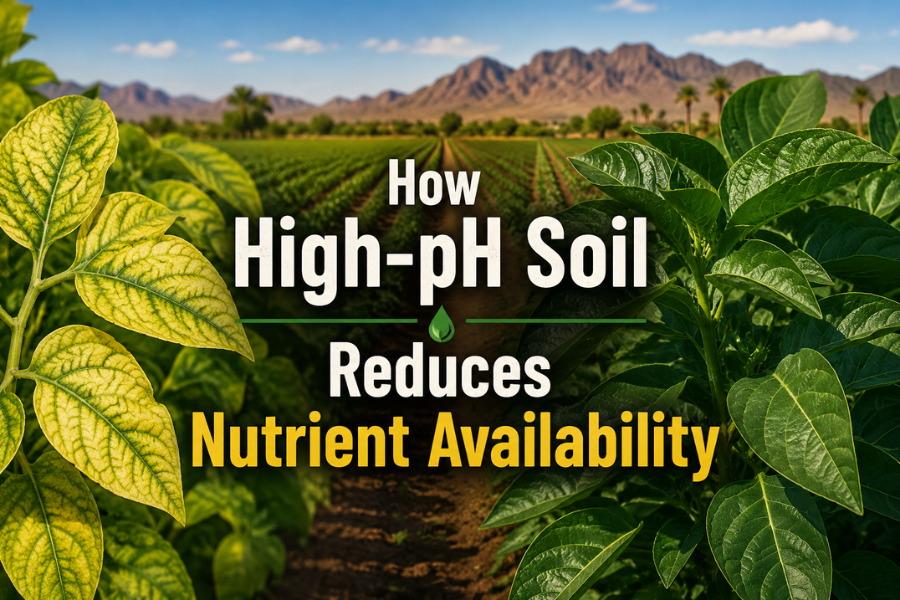
High-pH soil, also known as alkaline soil, is commonly found in arid and semi-arid agricultural regions such as Arizona and parts of the southwestern United States.
In these environments, soil pH levels often remain above 7.0, and in many cases may reach 7.5–8.5 or higher depending on irrigation conditions and soil composition.
While crops may still grow under alkaline conditions, nutrient availability can become increasingly limited as soil pH rises.
Why Nutrient Availability Changes in High-pH Soil
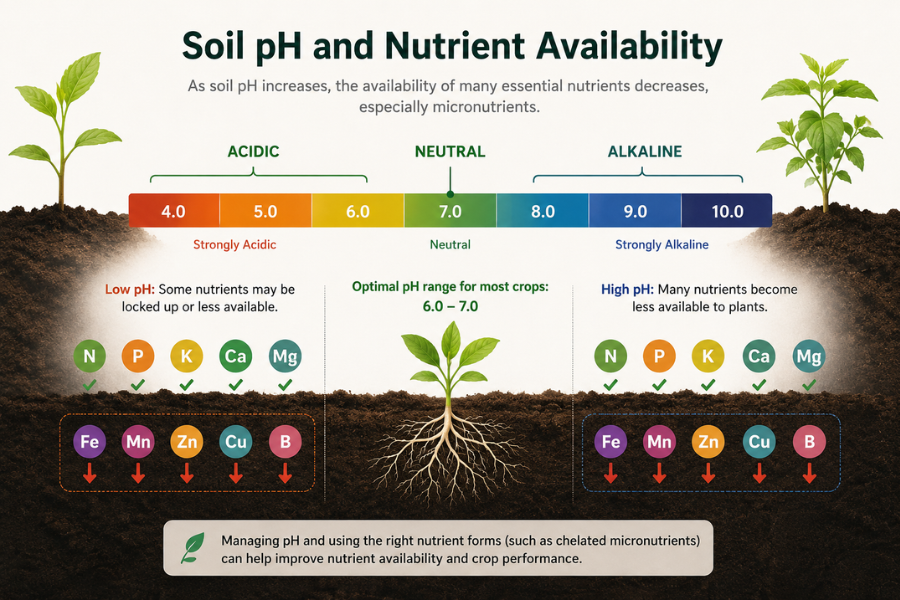
As soil pH increases, several important nutrients become less available for plant uptake.
Micronutrients such as iron, zinc, manganese, and magnesium are especially affected in alkaline environments.
Even when these nutrients are present in the soil, crops may struggle to absorb them efficiently.
This can lead to nutrient deficiencies, reduced plant performance, and inconsistent crop quality.
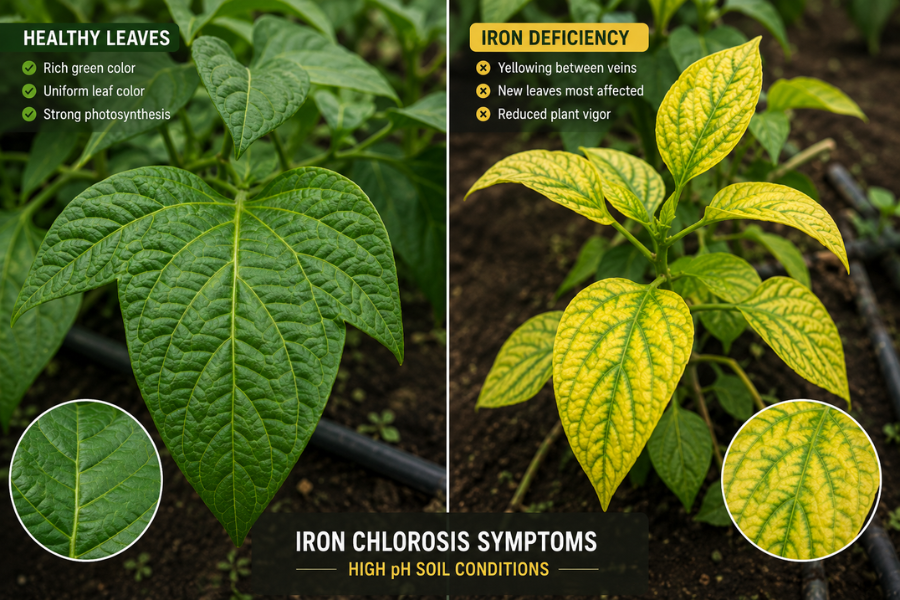
Common Symptoms in Crops
High-pH nutrient limitations often appear through visible crop symptoms, including:
- Yellowing leaves (chlorosis)
- Weak vegetative growth
- Reduced flowering and fruit set
- Poor fruit development
- Reduced crop vigor
- Uneven crop performance
These symptoms are commonly observed in vegetables, fruit crops, greenhouse systems, and other high-value agricultural operations.
Why Iron Deficiency Is Common in High-pH Conditions
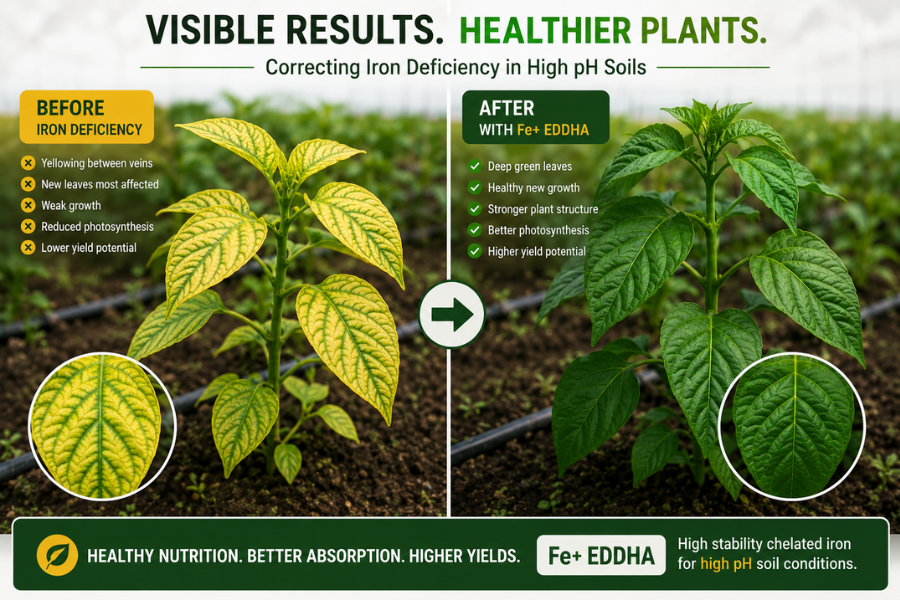
Iron deficiency is one of the most common nutrient issues in alkaline soils.
Under high-pH conditions, standard iron sources may become less effective, reducing iron availability to the plant.
As a result, crops may develop interveinal chlorosis, especially in young leaves.
Chelated iron sources such as EDDHA iron are often used in high-pH systems because they provide greater stability under alkaline soil conditions.
Practical Nutrient Strategies for High-pH Agriculture
Managing crop nutrition in alkaline environments often requires a more targeted nutrient approach.
Common strategies may include:
- Chelated micronutrient programs
- Foliar nutrition applications
- Balanced calcium management
- Biostimulant support programs
- Irrigation management practices
- Root-zone focused nutrition strategies
The goal is not only to supply nutrients, but also to improve nutrient efficiency under challenging soil conditions.
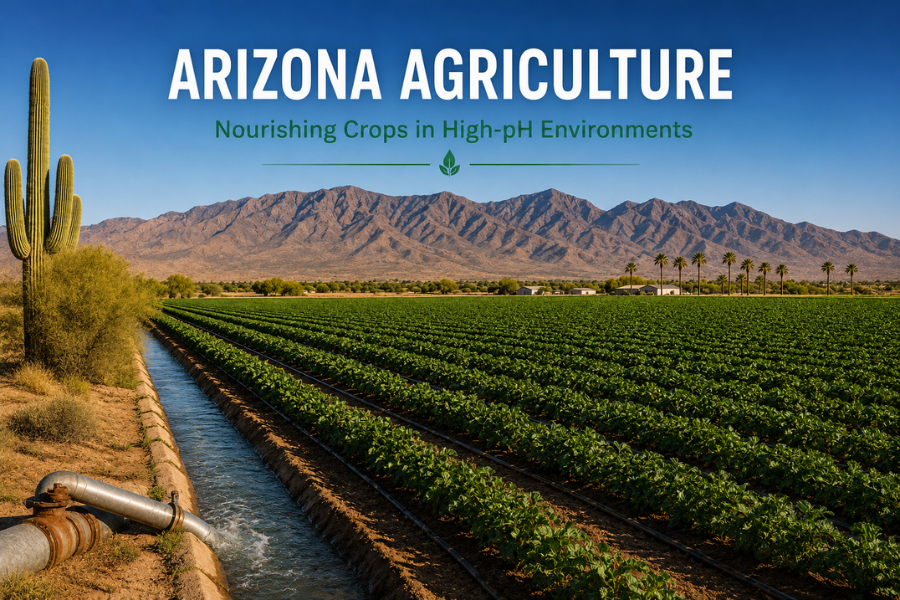
High-pH Agriculture in Arizona
Arizona agriculture operates under some of the most challenging nutrient management conditions in the United States.
High-pH soils, reclaimed irrigation water, heat stress, and bicarbonate accumulation can all influence nutrient availability and crop performance.
As a result, growers often require more specialized nutrition programs designed around practical field conditions.
Final Thoughts
High-pH soil conditions can significantly affect nutrient availability, crop performance, and overall nutrient efficiency.
Understanding how alkaline conditions influence nutrient uptake is an important step toward building more effective crop nutrition programs.
Practical nutrient management strategies focused on micronutrient efficiency, balanced nutrition, and root-zone performance can help support healthier crop development in high-pH agricultural systems.