
Why Iron Availability Matters
Iron plays an essential role in chlorophyll production, plant metabolism, and overall crop performance.
In high-pH soils, iron availability often becomes limited, even when iron is present in the soil.
As a result, growers commonly experience:
- chlorosis
- yellowing leaves
- weak crop vigor
- reduced turf color
- inconsistent plant development
Selecting the right iron source becomes increasingly important under alkaline soil conditions.
What Is EDTA Iron?
EDTA iron is one of the most commonly used chelated iron sources in agriculture.
It performs well under slightly acidic to neutral soil conditions and is widely used in general crop nutrition programs.
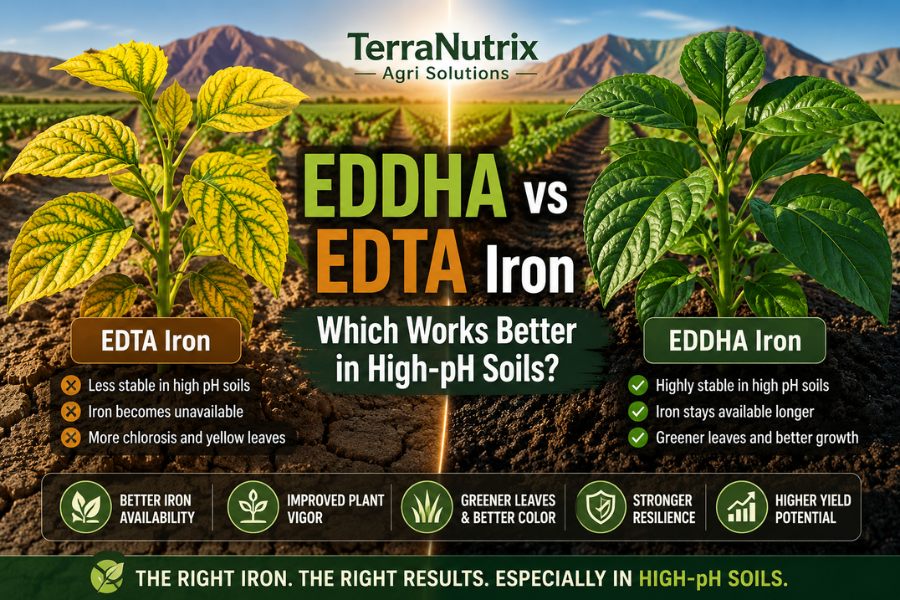
However, under high-pH conditions, EDTA iron stability may decline, reducing iron availability to the plant.
What Is EDDHA Iron?
EDDHA iron is a more stable chelated iron source designed for alkaline and high-pH soil environments.
EDDHA chelation helps maintain iron availability even under challenging soil conditions where standard iron sources may become less effective.
As a result, EDDHA iron is commonly used in:
- high-pH agricultural systems
- calcareous soils
- alkaline irrigation environments
- turf systems
- orchards and specialty crops
EDDHA vs EDTA in High-pH Soils
Under alkaline soil conditions, EDDHA iron generally provides greater stability and longer-lasting iron availability compared to EDTA iron.
This often results in:
- improved chlorosis correction
- stronger green color
- more consistent nutrient efficiency
- improved crop appearance
- better performance under high-pH conditions
EDTA iron may still perform effectively under lower pH conditions, but high-pH environments often require more stable iron chelation strategies.
Common Applications for EDDHA Iron
EDDHA iron is commonly used in:
- vegetables
- citrus
- vineyards
- orchards
- greenhouse systems
- turf management
- golf courses
- high-pH irrigation systems
It is especially common in regions where alkaline soils and bicarbonate-related nutrient challenges are frequent.
Iron Management in Arizona Agriculture
Arizona agriculture and turf systems commonly operate under high-pH conditions where iron availability becomes a major nutrient management challenge.
As a result, stable chelated iron programs are often integrated into broader crop and turf nutrition strategies.
Managing iron efficiently under alkaline conditions can help improve crop quality, turf appearance, and overall nutrient performance.
Final Thoughts
Both EDTA and EDDHA iron sources have agricultural applications, but high-pH environments often require more stable iron chelation systems.
Understanding how different iron sources perform under alkaline conditions is important for building more effective nutrient management programs in crops and turf systems.